Jollof and rice dishes
Jollof rice is the flagship: smoky, tomato-based, contested with Ghana. Yellow Chilli's version in Ikoyi ($8 as a side) is a benchmark. Ofada rice with ayamase sauce, a green-pepper stew, is the local specialty; try it at Ile Iyan in Lekki Phase 1, about $10. Fried rice with liver and prawns at any Nigerian party spot goes for $9.
Party jollof, cooked in giant pots over firewood at weddings and owambe events, tastes different from restaurant versions because of the smoke; if you get invited to one, go, it is the best jollof in Lagos and costs nothing but a gift for the couple. Banga rice, cooked in palm-fruit extract with dried fish, is a Delta and Bayelsa specialty found on most buka menus along Admiralty Way for about $9. Coconut rice, sweeter and less common, turns up as a Sunday special. Skip any jollof advertised as international fusion; the plain buka version, cooked with basmati or ofada rice, is always the better order.
Soups and swallows
Egusi soup (melon seed, spinach, meat), okra soup, and pepper soup are the big three. Eat them with pounded yam, eba (cassava) or amala. Iya Basira on Admiralty does the traditional buka version for $8 a plate. For upscale, Terra Kulture in Victoria Island plates them beautifully at $18. Pepper soup with catfish is a hangover cure at $12 anywhere.
Afang soup, made with waterleaf and afang leaf, and oha soup, thickened with cocoyam, are Cross River and Igbo specialties less common on Lekki menus but worth seeking out at bukas around Chevron Drive for around $9. Banga soup, cooked in palm-fruit extract with fish, pairs with starch or semo. Swallow options beyond pounded yam and eba include fufu (fermented cassava, softer and sourer), semo (semolina, quick and mild) and wheat (a lighter, diabetic-friendly option); most bukas let you pick any swallow with any soup for the same price. Order the swallow slightly smaller than offered; portions are generous and refills are usually free.
Suya, small chops and street food
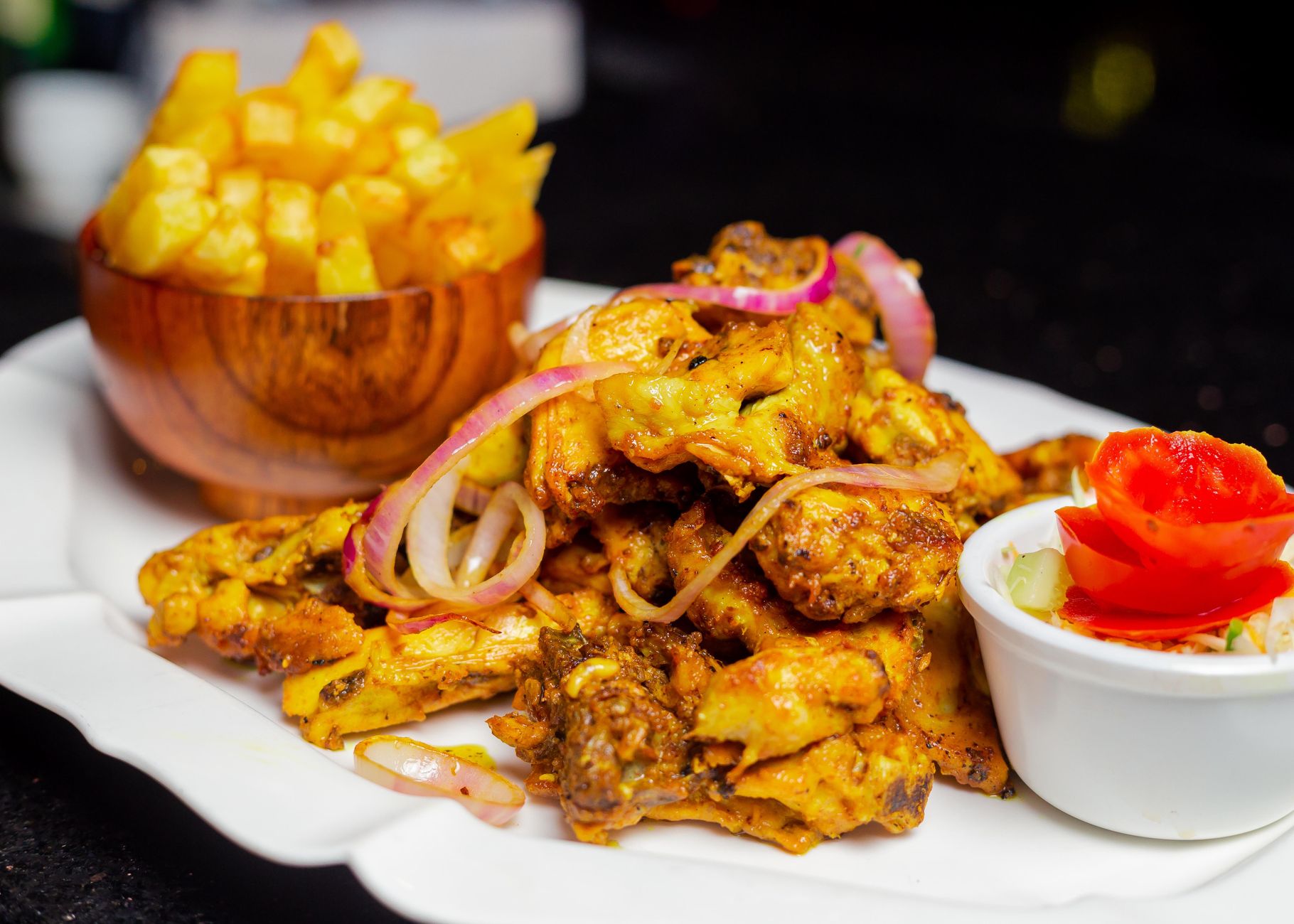
Suya is grilled spiced beef, the national street snack. Glover Court Suya's Lekki branch on Admiralty is the reference at $4 a stick. Small chops (puff-puff, samosa, spring roll, chicken) come in trays for $8. Boli (roasted plantain with peanut sauce) is $2 on the street. Akara (bean cake) with pap for breakfast at any buka, $2.
Isi ewu, spiced goat head in a thick pepper sauce, is a heavier small-chops cousin found at native-food joints rather than street stalls, priced around $15 a portion and meant for sharing. Kilishi, a dried and spiced beef jerky from the north, keeps for weeks and makes a better souvenir than most Lekki gift shops, sold by weight from about $6 for a small pack. Roasted corn with ube (African pear) is a rainy-season street snack, $1.50 a set, sold from braziers along the Lekki-Epe Expressway. Peppered gizzard, a party-tray staple, is worth ordering as a side wherever small chops are sold rather than as its own dish.
Seafood
Grilled tilapia and croaker are the go-to fish. Ocean Basket on Admiralty and Cafe Vergnano do them well at $18 to $25. Point-and-kill catfish at Bature Brewery is $20 and comes with cold craft beer.
Grilled prawns, sold by the dozen, run about $14 to $20 depending on size and are best ordered peppered rather than plain. Banga fish stew, palm-fruit based with catfish or mackerel, is heavier and starchier than a grilled fillet and pairs well with rice rather than swallow, around $12 at bukas near Chevron Drive. Crayfish and dried fish appear as seasoning in almost every soup rather than as standalone dishes, so if a soup tastes smoky and deep, that is usually crayfish rather than chili. For a first seafood meal in Lekki, grilled croaker with pepper sauce is the safer, more universally liked order over the point-and-kill catfish, which is spicier and bonier.
Nkwobi and native delicacies
Nkwobi, cow foot slow-cooked in a spiced palm-oil sauce and served in a wooden bowl, is a beer-parlour classic best eaten with the hands and a cold Star or Gulder. It runs about $10 to $14 depending on portion and is richer than it looks, so one bowl comfortably feeds two. Peppered snail, tougher and more polarizing than the other delicacies here, is an acquired texture more than an acquired taste; order it grilled rather than boiled for a better first try, at around $12 for a small plate.
These dishes cluster around native-food restaurants and beer parlours rather than the seafood or jollof spots listed above, so plan a separate evening for them rather than trying to order everything at once. Bature Brewery, already worth a stop for point-and-kill catfish, also does a solid nkwobi at $13, which makes it the single best stop for pairing native delicacies with craft beer in one sitting. Skip nkwobi at generic party caterers; it dries out fast once it is off the fire and is best eaten within twenty minutes of being served.
Drinks and desserts to pair
Chapman, a fruit-forward cocktail of Fanta, Sprite, grenadine and bitters, is the default non-alcoholic order at most restaurants and runs $4 to $6. Palm wine, fermented and mildly alcoholic, is sold fresh at native-food joints rather than upscale restaurants and is best drunk the same day it is tapped, before it turns sharply sour. Zobo, a hibiscus drink flavored with ginger and pineapple, is the cheaper, more common cold option at bukas, about $2 a bottle, and cuts through pepper heat better than any soda.
For dessert, puff-puff (fried dough balls) and chin chin (crunchy fried pastry cubes) double as street snacks and dessert, sold by the bag for $2 to $3, and keep well enough to take back to a hotel room. Meat pie, a flakier, savory hand pie, is the standard airport or road-trip snack rather than a restaurant dessert. Ice cream and Western-style desserts are easy to find at malls like Circle Mall on Freedom Way, but they are the least interesting order on any Lekki menu; if choosing between chin chin and cake, take the chin chin.
Where to stay for easy access to the food scene
Most of the restaurants and bukas above sit along Admiralty Way, Chevron Drive and the Lekki-Epe Expressway in Lekki Phase 1, so a hotel within that stretch cuts commute time to almost zero. Lekki Hotel and Suites and SummerTym Hotel & Suites both sit close enough to Admiralty Way to walk to Glover Court Suya and several bukas, at $45 to $70 a night. Tristar Hotel & Suites and Bamod Hotel and Suites are a short taxi ride from the same strip and run slightly cheaper, around $35 to $55.
If the plan includes a beach day alongside the food crawl, Wavecrest Beach Hotel & Resort combines proximity to Ibeju-Lekki's beach resorts with easy access back into Lekki Phase 1 for dinner, though the drive back into town after dark can run 40 minutes in traffic. Sunnyvale Hotel is a reasonable mid-range pick for travelers who want predictable rooms over character. Whichever hotel you pick, ask staff for the nearest buka rather than relying only on the restaurants named here; every neighborhood in Lekki has a good one that never makes any list.
Questions, answered
What's the national dish of Nigeria?
Jollof rice is the closest thing. Egusi soup and pounded yam is the traditional heartland dish.
Where's the best jollof in Lekki?
Yellow Chilli in Ikoyi, RSVP for a fancy version, Iya Basira on Admiralty for the buka original.
Is Nigerian food spicy?
Yes, most dishes have scotch bonnet heat. Ask for less pepper if you're sensitive.
Can vegetarians eat well in Lekki?
Yes but you'll work for it. Ofada rice without meat, moin moin (bean pudding), and every restaurant has salads and pasta.
What time do bukas and street-food stalls open and close?
Most bukas open by 8am for breakfast akara and pap and stay open until the food runs out, often by 9pm. Street suya and boli stalls come alive after dark, from around 6pm to well past midnight. Sunday afternoons are the quietest time to eat at sit-down restaurants, since many locals are still at church or at home cooking. Avoid arriving at a buka right at closing time; the best cuts of meat and fish sell out first.
How much should a half-day food crawl in Lekki cost?
Budget $25 to $40 per person for a self-guided crawl covering suya, small chops, a soup and swallow, and a drink at three or four stops. Add $15 to $20 if seafood or nkwobi is on the list. Guided food tours exist but often charge $60 to $100 for the same stops you can walk to yourself with this list. A taxi or rideshare between stops rarely costs more than $3 to $5 given how close together Admiralty Way and Chevron Drive sit.
Doing good is the business: every booking through Stay Lekki funds one verified tonne of carbon removal — same room, same price, no markup.
Start Your Search