Oniru Private Beach
The original Oniru beach — smaller, cheaper and calmer than neighbouring Landmark, with the same Atlantic and half the crowd.
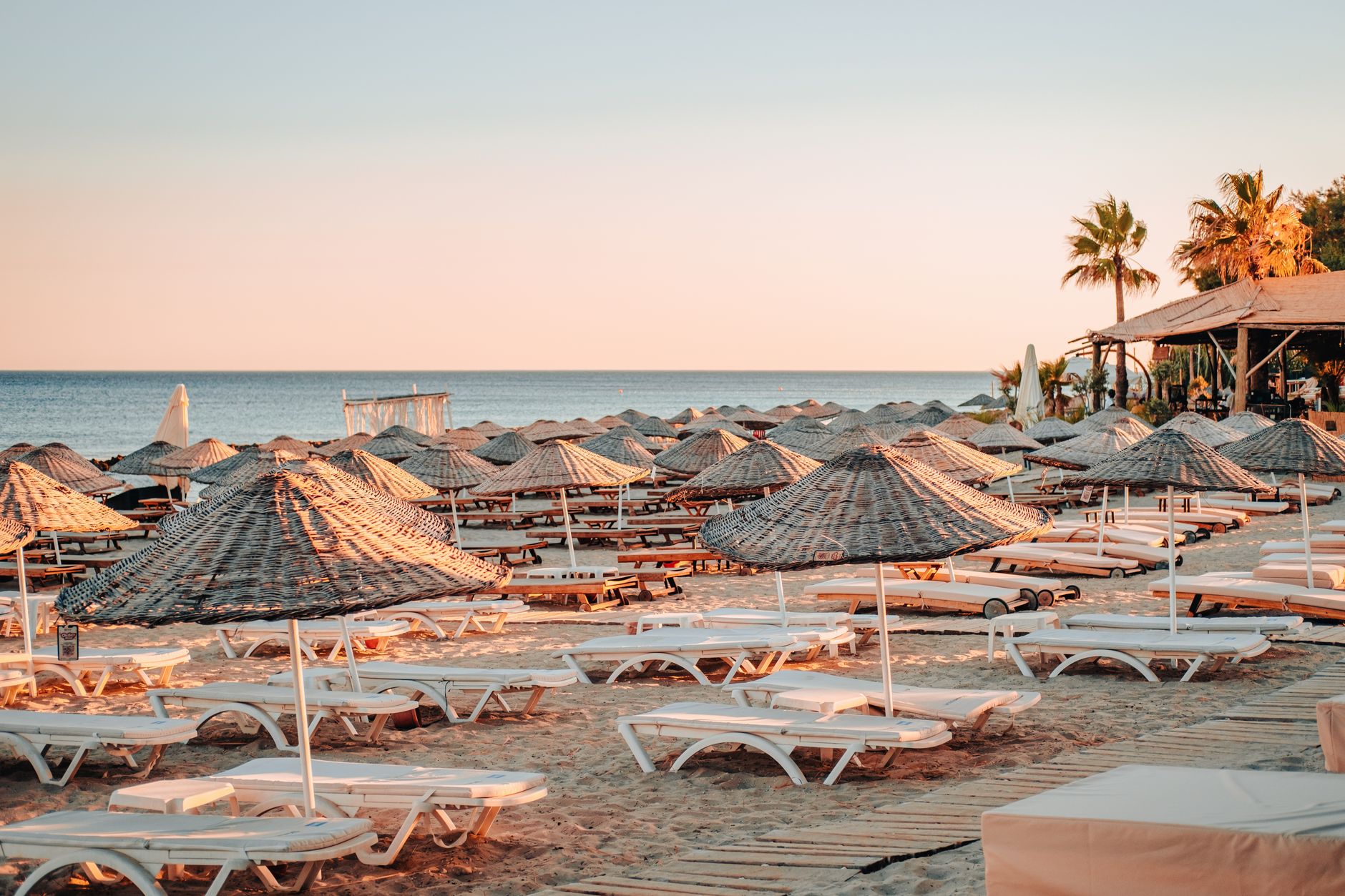
Before Landmark expanded into the boardwalk-and-brunch operation it is today, Oniru Private Beach was the neighbourhood's default beach outing, and it still is for many locals. Owned by the Oniru royal family and tucked just west of Landmark on the same stretch of Atlantic sand, it is smaller, cheaper and less obviously curated — a good middle ground between the party of Elegushi and the polish of Landmark. Access is off Ligali Ayorinde Street in the Oniru estate.
Inside you get a run of loungers, thatched huts, a few beach bars and a small food strip serving suya, grilled fish and jollof. Music plays but you can talk over it. Horse rides, quad bikes and beach football fill the sand. There are lifeguards at weekends and clean toilets near the entrance. The atmosphere on Sundays is Lagos-family — plastic chairs, gospel music from portable speakers, kids in the surf up to their knees. It is one of the best places on the peninsula to feel the local rhythm without the aggressive vendors of Elegushi.
Weekday afternoons are the quietest — you can have a whole hut for the price of a lounger. Weekend evenings get busy from 17:00 onward. The gate is a 5-minute walk from Landmark Village, so it is easy to check both and pick whichever suits your budget. Combine with dinner at RSVP or Cafe Vergnano on Akin Adesola Street back in Victoria Island.
The walk in tells you what kind of place this is. You pay at a booth by the gate, pass a short run of parked cars and a row of food shacks throwing suya smoke across the path, and the sand opens up in about forty seconds — no boardwalk, no ticket gantry, no queue for a wristband. Turn left and you drift toward the fence line that separates this stretch from Landmark, where the sand is busiest and the speakers loudest. Turn right, walk three or four minutes west, and the huts thin out until it is you, a few fishermen's lines and the grey Atlantic breaking hard on a steep shore. That western end is the reason to come. Claim a hut there rather than near the bar, and you get shade, breeze and a clear view of the whole beach for the same money.
Getting here from central Lekki is a 10 to 20 minute ride-share along Ozumba Mbadiwe Avenue, costing roughly $3 to $5 from Lekki Phase 1 and $4 to $7 from Ikoyi, with the time depending entirely on how badly the Falomo and Maroko approaches are backed up. From Ikeja or the airport allow 60 to 90 minutes and $20 to $30. Yellow danfo buses running the Ajah to Obalende route will drop you at the Maroko or Oniru stops on Ozumba Mbadiwe for well under $1, leaving a 10 minute walk down Ligali Ayorinde Street. Motorcycle taxis are banned across this part of Eti-Osa, so it is a keke or your feet for the last leg. There is a paid car park inside the gate that fills by mid-afternoon on Saturdays; agree the attendant's fee, usually a dollar or two, before you leave the car.
Costs stay small if you plan them. Entry is $5 for an adult and $3 for a child, with under-fives free. A lounger adds about $5 and a thatched hut runs $15 to $25 for the whole day depending on size and how close it sits to the water. Food is where the money actually goes: a suya plate is a few dollars, a whole grilled croaker or tilapia with sides lands nearer $8 to $12, and bottled beer or soft drinks sit around $2 to $3. Horse rides and quad bikes are negotiated per lap with the men who own them — settle the number out loud before anyone sits on anything, because the price doubles once your child is already in the saddle. Two adults doing beach, huts, a fish lunch and drinks should budget $40. Bring small naira notes; card machines here are unreliable and there is no ATM inside.
Timing matters more than anything else on this beach. The 9:00 to 11:00 window on a weekday is the calmest you will ever see it — cool sand, sea breeze, huts unclaimed, almost no music. Between 12:00 and 15:00 the sun is punishing and there is no shade at all outside a hut, so that is the block to spend eating rather than lying out. From 16:00 the light softens and the crowd builds; sunset lands between 18:45 and 19:15 all year, and the half hour before it is the best of the day. Season-wise, November to March is dry and reliable, with harmattan haze in December and January cooling things but flattening the sunsets. June and July bring the heaviest rain, rough surf and driftwood on the sand. Late December is Lagos at full volume — expect the beach packed daily and the huts gone by 11:00.
It suits families with small children, budget travellers and anyone who wants Lagos beach life without a cover charge. Toddlers can paddle at the shoreline while you keep a hut ten metres back, and the Sunday crowd is overwhelmingly local families rather than a club scene. Teenagers who want jet skis, trampolines and a food court will be happier paying more next door at Landmark. Wheelchair users will struggle: the sand starts immediately, there is no matting or boardwalk, and only the entrance apron is firm enough to roll on. On a wet afternoon there is nothing to do here — the huts leak and the bars are open-sided, so save it. If you only have an hour before dinner on Akin Adesola Street, come anyway at 18:00, pay the $5, walk the western end and leave at dark.
Fold it into a half-day on foot. Landmark Village is a five-minute walk east if you want to compare gates or eat somewhere with air conditioning. Eko Hotel Main Building is about ten minutes west along Ligali Ayorinde and Adetokunbo Ademola if you want a poolside drink afterwards, and The Federal Palace Hotel & Casino on Ahmadu Bello Way is roughly fifteen. Radisson Blu Anchorage Hotel Lagos V.I. sits on Ozumba Mbadiwe about twenty minutes' walk back toward the water. Drive ten minutes to Tiamiyu Savage Street for Terra Kulture's gallery, bookshop and Nigerian kitchen, or twenty minutes east to Nike Art Gallery on Elegushi Road in Lekki Phase 1, which needs a full hour across its floors. The efficient version: gallery in the morning, beach from 16:00, dinner on Akin Adesola at 20:00.
The honest warnings. This is open Atlantic with a steep shelf and real rip currents, and lifeguards are only reliably on duty at weekends — swim to your waist, not past it, and never after drinking. The word private means gated and ticketed, not exclusive; on a big Saturday it is loud, busy and full of hawkers offering photos, bracelets and sunglasses, and a firm no is normal here rather than rude. Litter accumulates on Monday mornings after heavy weekends, and the water is brown-grey Atlantic, not turquoise — anyone arriving with Caribbean expectations will be disappointed within ten minutes. Construction along the Lagos-Calabar Coastal Highway has reshaped this whole waterfront in recent years and neighbouring beach operations have lost sections of sand to it, so check the beach's current status on social media before making a long trip across the city.
Hours & entry
Mon-Fri 9:00-20:00 · Sat-Sun 8:00-22:00
What to see
{'what': 'Sunset lounger session on the west end', 'where': 'West-side lounger row, past the central bar'}
{'what': 'Grilled suya from the beach strip', 'where': 'Food shack cluster near the main gate'}
{'what': 'Sunday football watching', 'where': 'Central sand area, kick-off 15:00 on weekends'}
Tips from the ground
Enter before 15:00 on Saturdays — parking fills fast
Weekday entry deals cut the gate fee by half
Bring your own towel — rentals are not consistent
Questions, answered
How much is Oniru Private Beach?
$5 per adult, $3 per child. Loungers $5, huts $15-$25 for the day. Parking inside the gate is a dollar or two paid to the attendant, and food is extra — suya plates a few dollars, a whole grilled fish with sides $8 to $12, drinks $2 to $3. Horse and quad-bike rides are negotiated on the spot, so fix the price before anyone climbs on. Two adults eating and drinking should budget $40 for the afternoon. Bring cash in small notes; card payment is unreliable and there is no ATM inside.
Are there free entry hours?
No free hours. Kids under 5 enter free. There is no student, resident or senior discount either, though weekday entry deals can cut the gate fee by half — worth asking at the booth before you pay. The only genuinely free sand on this coast is the unmanaged stretches away from the estates, which have no lifeguards, no toilets and no security, and are not a sensible swap for $5. If your budget is the issue, come on a weekday, skip the hut and take a lounger.
How long should I stay?
About 3 hours covers a swim, a meal and a walk. Roughly: twenty minutes to pay, cross the sand and claim a hut, an hour in and out of the water, forty-five minutes over grilled fish and a drink, then a twenty-minute walk west to the quiet end and back for the light. Stretch it to five hours if you have booked a hut for the day and want to watch the Sunday football at 15:00. An hour is enough only if you arrive at 18:00 purely for sunset.
When is it closed?
Open daily. Closes 20:00 weekdays, 22:00 weekends. Heavy rain can empty the place and shorten the evening in practice, and the beach occasionally closes sections for private parties, especially in December. Arrive by 18:00 if you want value from the entry fee rather than forty minutes of darkness. Because Lagos-Calabar Coastal Highway works have reshaped this waterfront and affected neighbouring beach operators, it is worth checking current opening on social media before committing to a cross-city trip in traffic.
Do I need to book?
No booking for entry. Huts are first-come; arrive by 11:00 on weekends. There is no online ticketing at all — you pay cash at the booth and walk in. For a group of ten or more, or for a birthday setup with several huts together, speak to the office at the gate a day or two ahead rather than turning up and hoping. Through late December the huts are gone well before 11:00, so treat that fortnight as an 08:00 arrival if you want shade.
What is the nearest stop?
Oniru Estate off Ligali Ayorinde Street. 5-min ride-share from Victoria Island or Lekki Phase 1. Danfo buses on the Ajah to Obalende route drop at the Maroko and Oniru stops on Ozumba Mbadiwe Avenue for under $1, leaving a 10-minute walk down Ligali Ayorinde. Lagos rail does not help here — the Blue Line runs Marina to Mile 2 and never reaches Victoria Island. Motorcycle taxis are banned across Eti-Osa, so the last leg is a keke or your own feet. Ride-share from Ikeja costs $20 to $30.
Doing good is the business: every booking through Stay Lekki funds one verified tonne of carbon removal — same room, same price, no markup.
Start Your Search